Nvidia unveiled its RTX Spark laptop line this week, positioning the devices as a direct assault on traditional desktop gaming dominance. The announcement sent ripples through stock markets, with Nvidia shares climbing 3.2 percent in after-hours trading as analysts weighed the implications for both consumer hardware and enterprise AI computing.
The Hardware Gambit
The RTX Spark laptops arrive with Nvidia's latest Ada Lovelace architecture, promising 40 percent better graphics performance than the previous generation. The company confirmed the devices will start at $1,499 for base models, with high-end configurations reaching $2,799. Santa Clara-based Nvidia stated the lineup targets both hardcore gamers and creative professionals who need portable power.
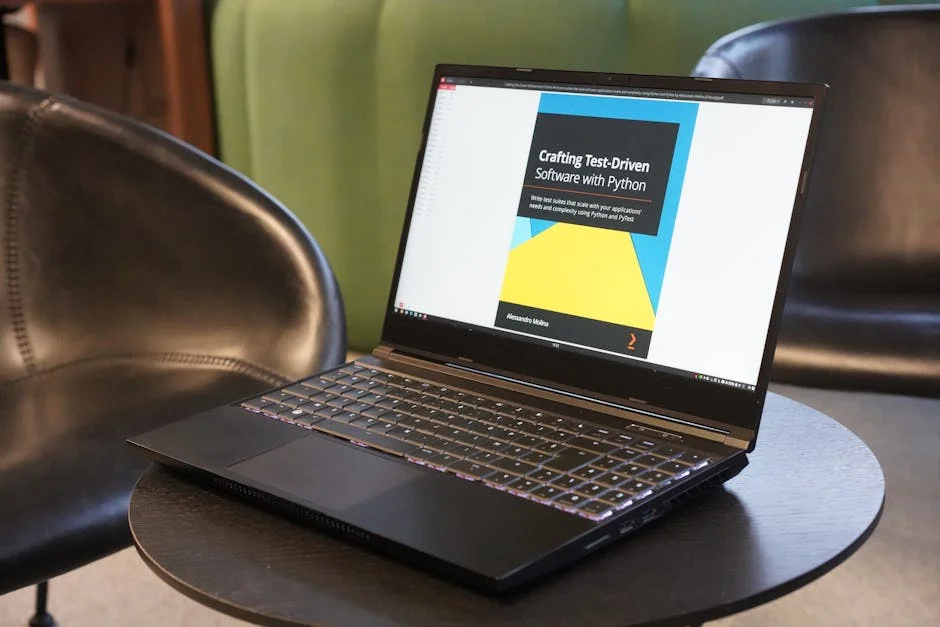
Industry observers noted the timing matters. Global laptop sales dropped 8 percent last quarter as consumers tightened spending, making market share gains critical for every manufacturer. Nvidia's push into premium laptops directly challenges Dell's XPS line and Apple's MacBook Pro, which has gained significant ground among creative workers since switching to custom silicon.
Why Markets Noticed
The gaming hardware sector generated $80 billion globally in 2023, and analysts tracking the space said Nvidia's move could reshape competitive dynamics. The company already commands roughly 80 percent of discrete graphics card sales, but the laptop market remains more fragmented. Investors now question whether AMD and Intel can respond effectively.
Jensen Huang, Nvidia's chief executive, described the launch as "the next chapter in portable computing" during a press briefing at the company's Fremont campus. The statement followed Nvidia's January earnings report, which showed data center revenue exceeding $18 billion for the quarter, dwarfing consumer graphics sales.
Supply Chain Ripples
The launch carries implications beyond immediate sales figures. Nvidia partnered with three major manufacturers—Asus, MSI, and Razer—to produce RTX Spark devices, spreading production across facilities in Taiwan and mainland China. This diversification strategy aims to avoid the supply bottlenecks that plagued the graphics card market during 2020 and 2021.
Semiconductor supply chains remain sensitive after years of disruption. TSMC, which manufactures Nvidia's chips at facilities in Hsinchu, increased advanced packaging capacity by 25 percent this year specifically to handle AI chip demand. The RTX Spark laptops will compete for that manufacturing capacity, potentially affecting availability of other products.
The AI Computing Angle
What separates RTX Spark from previous gaming laptops is explicit AI integration. Nvidia built dedicated Tensor cores into every unit, allowing local execution of large language models and AI-assisted tasks. The company demonstrated running a 7-billion parameter model directly on prototype hardware without cloud connectivity.
This capability targets a growing market. Enterprise buyers increasingly demand hardware that handles AI workloads locally, citing data privacy regulations and latency concerns. Nvidia's move positions the laptop line as a workstation alternative, not merely a gaming device. Morgan Stanley analysts estimated corporate AI PC purchases could reach $50 billion annually by 2026.
Competitive Response
AMD acknowledged the announcement but declined to specify product timelines. The company holds approximately 20 percent of the discrete GPU market and relies heavily on gaming partnerships. Intel, which recently relaunched its Arc graphics division, faces renewed pressure to demonstrate competitive alternatives.
Apple represents another strategic concern. The MacBook Pro with M3 Max chip matches or exceeds Nvidia's previous generation in several benchmarks while consuming significantly less power. Industry trackers noted that creative professionals—historically loyal to Nvidia's CUDA ecosystem—are increasingly evaluating Apple hardware for machine learning work.
Investor Calculus
Financial markets reacted with measured enthusiasm. Nvidia's market capitalization briefly exceeded $1.8 trillion following the announcement, solidifying its position as the world's most valuable chipmaker. Options trading showed heavy activity in call contracts, suggesting institutional investors expect further upside.
The consumer segment remains secondary to Nvidia's data center business, which now accounts for more than 80 percent of revenue. However, analysts tracking semiconductor stocks noted that consumer product launches influence investor sentiment and provide leading indicators for broader demand trends. A successful RTX Spark rollout could signal strength in discretionary spending among high-income consumers.
What Comes Next
Retail availability begins in six weeks, with pre-orders opening this Friday. Nvidia scheduled a developer conference in San Jose next month where executives plan to detail AI integration capabilities in more depth. The company faces immediate pressure to demonstrate real-world performance advantages, as synthetic benchmarks from manufacturers rarely match actual user experiences.
Supply allocation will reveal market priorities. If Nvidia directs most production toward lower-priced models, it signals confidence in volume growth. Concentrating on premium configurations would indicate a strategy focused on margin expansion. Investors and competitors alike will watch those signals closely as the holiday shopping season approaches.
See Also
- GIFT Nifty Plunges: India Markets Brace for Volatility
- Desde Launches Major Tech Update — Pplware Reports Surge in User Engagement
What is the latest news about nvidias rtx spark laptops set to shake up 80 billion gaming market?
Why does this matter for business-finance?
What are the key facts about nvidias rtx spark laptops set to shake up 80 billion gaming market?