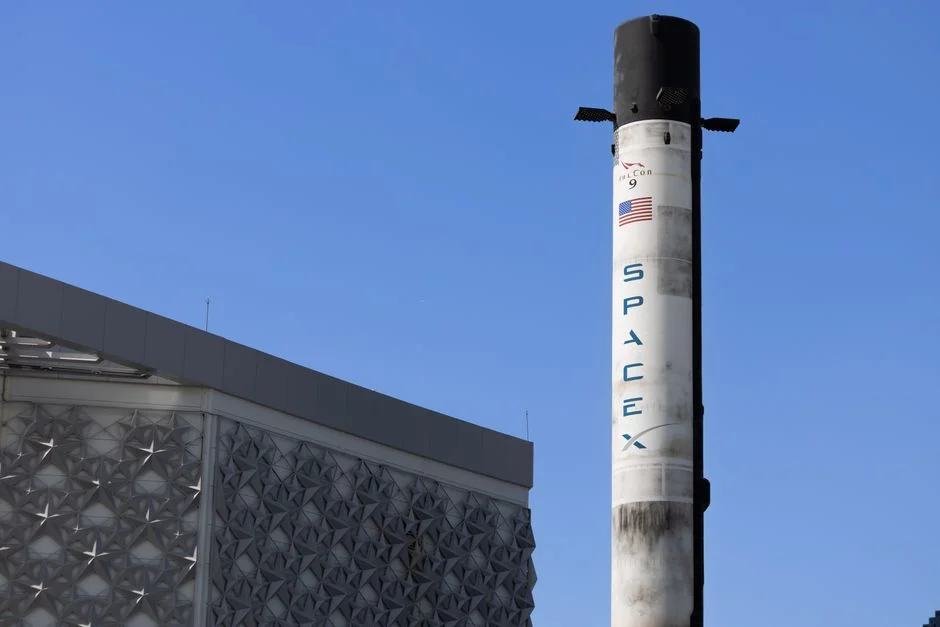
SpaceX has secured $75 billion in fresh capital ahead of what sources describe as the most anticipated stock market debut in recent memory. The funding round, confirmed by company insiders familiar with the matter, values the rocket manufacturer at roughly $350 billion and positions it for a listing that analysts say could reshape the aerospace sector. The announcement sent ripples through financial circles in New York and beyond, where institutional investors have been circling the company for months.
The Scale of SpaceX's Capital Raise
The $75 billion figure represents one of the largest private fundraising rounds ever completed by a non-publicly traded company. SpaceX, controlled by Elon Musk, has spent years building infrastructure for both NASA cargo missions and its own Starlink satellite internet constellation. That dual revenue model attracted interest from sovereign wealth funds, technology-focused hedge funds, and traditional institutional investors alike. The funding was oversubscribed, according to people familiar with the process, suggesting demand far exceeded what the company initially sought to raise.

Existing shareholders were permitted to sell secondary shares during the round, which allowed early investors like Founders Fund and Alphabet to take partial profits while maintaining positions. SpaceX itself did not issue new equity in that portion of the transaction, focusing instead on primary capital for expansion. The company's last major funding round, completed in 2023, valued SpaceX at roughly $180 billion, meaning the current valuation has nearly doubled in under two years.
Why the IPO Clock Is Ticking
SpaceX has signalled to advisors that it intends to pursue a public listing within the next twelve to eighteen months, pending favourable market conditions. The company has held informal conversations with investment banks about acting as lead underwriters, with Goldman Sachs and Morgan Stanley widely expected to anchor the process. A formal IPO timeline has not been publicly confirmed, but the capital raise is widely seen as a precursor to that move.
The decision to go public comes as SpaceX faces mounting capital requirements. Its Starship rocket programme, which completed its first successful full flight test earlier this year, requires significant ongoing investment before it can serve commercial customers. Meanwhile, the Starlink constellation continues to expand, with plans to deploy thousands of additional satellites to provide global broadband coverage. Both programmes demand steady cash flow that SpaceX has increasingly drawn from commercial customers, but a public listing would provide a broader funding base.
Market Implications for Aerospace Stocks
Analysts tracking the aerospace sector say a SpaceX listing would create immediate competitive pressure on established players. Boeing and Lockheed Martin, whose joint venture United Launch Alliance has seen market share erode to SpaceX over the past decade, would face a direct comparison to a high-growth peer on public markets. That dynamic has already prompted soul-searching at legacy aerospace firms, where executives have watched SpaceX command premium valuations in private transactions.
The broader satellite communications industry is also watching closely. Companies like Viasat and EchoStar, which operate competing broadband constellations, could face investor flight as capital rotates toward SpaceX's more aggressive expansion plans. Institutional investors in Austin, San Francisco, and New York have flagged the potential for a SpaceX listing to trigger sector-wide re-rating, particularly if the company demonstrates pricing power in Starlink's consumer and government segments.
Institutional Appetite and Investor Caution
Some money managers urge caution despite the enthusiasm surrounding SpaceX. The company's accounting remains opaque as a private entity, and investors have limited visibility into contract profitability or Starship development costs. A successful IPO depends partly on SpaceX opening its books sufficiently to satisfy public-market due diligence standards, which differ markedly from the selective disclosure typical of private funding rounds.
Others point to Tesla's public trajectory as a reference point. When Tesla listed in 2010, sceptics doubted its ability to scale electric vehicle production profitably. The stock subsequently surged, rewarding early public shareholders and cementing Musk's reputation as a capital markets operator. SpaceX bulls argue the same narrative could repeat, with the additional cushion of government contracts providing revenue stability that Tesla lacked at its IPO.
The Musk Factor in Capital Markets
Musk's personal brand introduces both opportunity and risk for potential public shareholders. His ability to command media attention and drive retail investor interest has proven a consistent force in markets where his companies trade. Tesla's market capitalisation frequently moves on Musk's social media posts, and SpaceX's valuation has climbed alongside his public profile. Fund managers say that dynamic could amplify volatility in any post-IPO trading, creating both upside potential and downside exposure that traditional aerospace investors may find uncomfortable.
The timing of the raise coincides with a broader resurgence in technology IPOs. After two years of subdued activity, companies including Reddit and Rubrik have successfully listed in recent months, signalling that institutional appetite for new public offerings has recovered. Investment bankers say that window could suit SpaceX well, provided market conditions remain stable through the preparation period.
What Comes Next for SpaceX
SpaceX is expected to file a registration statement with regulators in the coming months, beginning the formal process of going public. The company will need to navigate SEC review, investor roadshows, and book-building before any trading can begin. Market participants should watch for the official IPO filing, which will reveal SpaceX's precise revenue figures, contract backlog, and Starship development spending for the first time.
Until then, secondary market activity in SpaceX shares will likely intensify. Platforms facilitating private company share trading have already seen volumes spike following the funding announcement. For investors unable to secure allocation in the IPO itself, the secondary market may offer the only entry point, albeit at prices that reflect the elevated expectations baked into the $350 billion valuation.
See Also
- Nvidia Stock Slumps 3 Days Before Earnings — Why Investors Should Care
- South African Court Rejects Man's Appeal to Avoid Paying R40,000 Interim Maintenance - What It Means for Family Finances
Market participants should watch for the official IPO filing, which will reveal SpaceX's precise revenue figures, contract backlog, and Starship development spending for the first time.Until then, secondary market activity in SpaceX shares will likely intensify. For investors unable to secure allocation in the IPO itself, the secondary market may offer the only entry point, albeit at prices that reflect the elevated expectations baked into the $350 billion valuation.
What is the latest news about spacex raises 75 billion ahead of historic stock market debut?
Why does this matter for business-finance?
What are the key facts about spacex raises 75 billion ahead of historic stock market debut?