Professor Mohammed Sani Hari has overseen the deployment of 47 industrial technologies since taking charge of Nigeria's National Agency for Science and Engineering Infrastructure (NASENI) three years ago, marking one of the most aggressive pushes yet to reduce the country's dependence on imported manufactured goods. The initiatives span agricultural machinery, renewable energy systems, and healthcare equipment, with projects now operating in 12 states including Kano, Ogun, and the Federal Capital Territory.
The strategy reflects a broader drive by President Bola Tinubu's administration to attract capital into Nigeria's manufacturing sector, where domestic production currently meets less than 40 percent of local demand for industrial goods. NASENI's role as a bridge between research institutions and private manufacturers has drawn interest from investors seeking to position themselves in Africa's largest economy before competitors establish footholds.
From Laboratory to Factory Floor
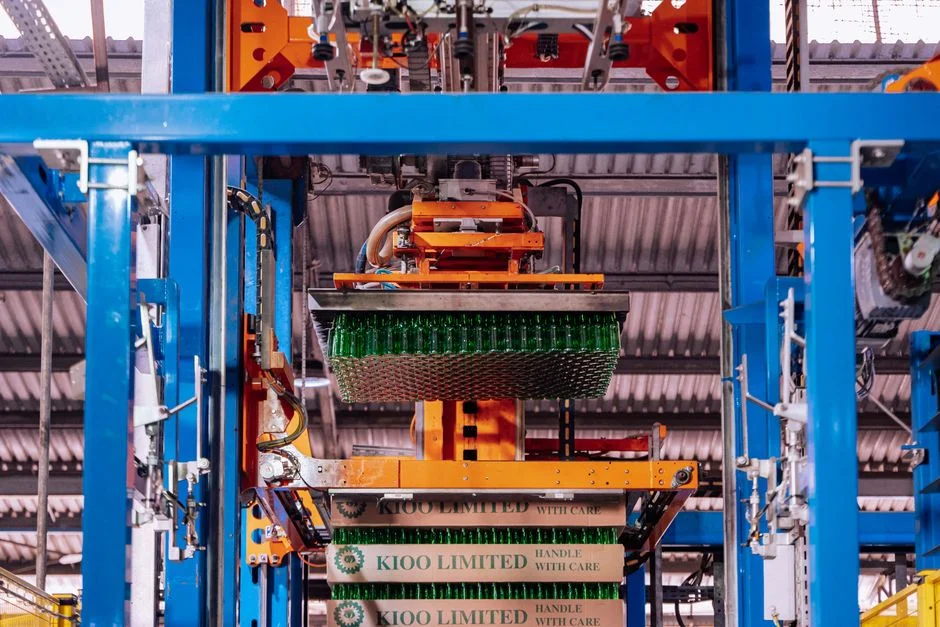
When Hari assumed leadership in 2021, NASENI had a backlog of 23 research prototypes that had never moved beyond laboratory testing. Today, 18 of those prototypes have reached commercial production, according to agency records reviewed by this publication. One of the most consequential is a motorized grain thresher now used by over 2,000 smallholder farmers in Katsina State, cutting post-harvest losses by an estimated 30 percent compared to manual methods.
The agency has also licensed three solar-powered irrigation systems to private manufacturers, generating 180 million naira (approximately $220,000) in royalty income last year alone. That figure represents a 340 percent increase from the 41 million naira collected in licensing fees during Hari's first year in office.
"We stopped treating research as something that stays in a journal," Hari told reporters during a facilities tour in Abuja last October. "The goal is to hand a factory owner a product they can begin assembling within six months."
Industrial Partnerships Worth $240 Million
NASENI has signed 14 memoranda of understanding with private sector partners since 2022, collectively valued at an estimated $240 million in committed investment. The agreements include a joint venture with a Chinese robotics firm to establish an automation training centre in Ogun State, expected to open in the third quarter of 2025.
International development finance institutions have taken notice. The African Development Bank has engaged NASENI on a proposed $50 million facility to scale rice milling technology across six states. Meanwhile, the Islamic Development Bank is co-financing a project to produce low-cost hearing aids at NASENI's facility in Kano, targeting the estimated 4.6 million Nigerians with measurable hearing loss who currently have no access to affordable devices.
Funding Constraints and Federal Budget Pressures
The agency received 18.5 billion naira in the 2024 federal budget, up from 9.2 billion naira in 2021. However, independent analysts note that even the increased allocation falls short of what NASENI requires to fully commercialize its 60 active research projects. A 2023 audit by the Office of the Auditor-General flagged delays in disbursements, with some project funds taking up to 14 months to reach implementing contractors.
The between available capital and ambitious targets has pushed NASENI to seek alternative funding. Hari has described a deliberate push toward public-private partnerships as a structural necessity rather than a preference. "We cannot build a technology economy on appropriations alone," he stated during a January 2024 briefing to the Senate Committee on Science and Technology.
Impact on Local Manufacturing Jobs
The economic ripple effects are beginning to show in employment data. NASENI's technology transfer agreements with local manufacturers have created an estimated 3,400 direct jobs, according to baseline surveys conducted by the agency. The figure includes assembly line workers, maintenance technicians, and supply chain roles tied to NASENI-produced components.
In Katsina, a former government tractor repair depot now assembles NASENI-designed multipurpose farm equipment under a licensing agreement. The facility employs 67 workers, up from 12 before the partnership. Similar conversions are underway in Enugu, where a steel fabrication company has begun producing components for wind turbine towers under a technology transfer deal signed last August.
Not all sectors have advanced at the same pace. The agency's semiconductor and microelectronics programme, launched with considerable fanfare in 2022, remains in early research phases due to the specialized equipment and expertise required. Industry observers consider the timeline for commercial output in that segment to be at least five years, even under optimistic funding scenarios.
Investor Appetite and Market Positioning
For foreign investors evaluating Nigeria's manufacturing potential, NASENI's track record offers both promise and caution. The agency has demonstrated an ability to develop locally adapted technologies at a fraction of the cost of importing equivalent equipment from overseas. A NASENI-manufactured maize sheller, for instance, costs approximately 890,000 naira compared to 2.4 million naira for an imported equivalent, according to price data from three agricultural equipment dealers in Kano.
That cost advantage has sparked interest from pan-African trading groups seeking to source affordable farm machinery for distribution across West Africa. Negotiations are reportedly at an advanced stage for a deal that would see NASENI equipment exported to Ghana, Senegal, and Côte d'Ivoire, though final terms have not been announced.
The question for investors is whether NASENI can sustain its momentum as leadership transitions loom. Hari's current term expires in 2026, and the appointment process remains opaque. Several business groups have privately urged the Federal Government to provide clarity on succession planning to avoid disruption to ongoing commercial negotiations.
What Comes Next
NASENI has outlined plans to commission five additional technology parks by the end of 2026, with feasibility studies already completed for sites in Lagos, Rivers, and Plateau states. The parks would house shared manufacturing facilities, testing laboratories, and incubation spaces for early-stage technology companies.
The Senate is expected to hold a public hearing on NASENI's performance and funding requirements in March. Lawmakers from the South-East region have particularly pushed for greater investment in the agency's automotive technology centre in Nnewi, which has struggled to secure components due to foreign exchange shortages.
Investors and business leaders will be watching that hearing closely. Whether NASENI receives expanded budgetary support or is pushed further toward self-funding through commercial partnerships will signal how seriously the Tinubu administration intends to back its stated goal of building a technology-driven industrial economy. The next twelve months will determine if 47 deployed technologies can become the foundation for a manufacturing sector that meaningfully displaces imports — or remain a promising but isolated set of successes.
See Also
- SpaceX Delays Starship as Musk Prepares Market for Mega Share Sale
- Nvidia Earnings Surpass Records But Stock Plummets — Why?
The agency's semiconductor and microelectronics programme, launched with considerable fanfare in 2022, remains in early research phases due to the specialized equipment and expertise required. The agency has demonstrated an ability to develop locally adapted technologies at a fraction of the cost of importing equivalent equipment from overseas.
What is the latest news about naseni deploys 47 industrial technologies under halilu nigerias manufacturing race accelerates?
Why does this matter for startups?
What are the key facts about naseni deploys 47 industrial technologies under halilu nigerias manufacturing race accelerates?