Waymap has launched its visually impaired navigation system across 15 new transport hubs, including major nodes like Dhoby Ghaut and Outram Park. This expansion marks a strategic push into high-traffic urban corridors where precision navigation directly impacts commuter efficiency. The move signals a growing maturity in the mobility technology sector, transforming accessibility from a niche feature into a core infrastructure asset.
Investors are watching this rollout closely as it demonstrates the scalability of sensor-based navigation solutions. The integration of real-time data at complex junctions like Dhoby Ghaut offers a template for how smart city technologies can reduce friction in daily economic activity. This is not just about convenience; it is about unlocking the labor potential of millions of commuters who face daily transit barriers.
Market Implications of Smart Transit Expansion
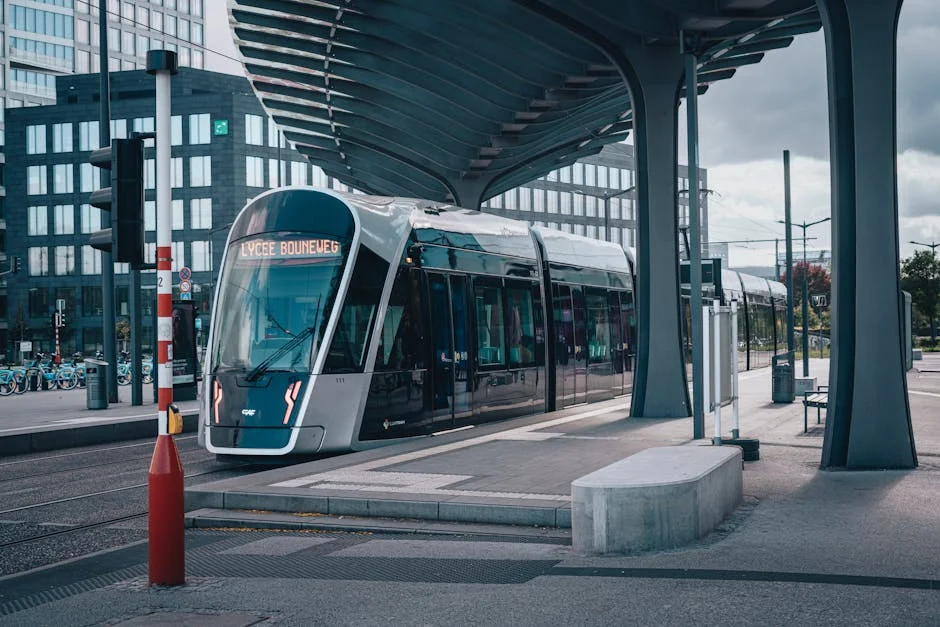
The deployment of advanced navigation tools at key locations like Dhoby Ghaut affects the broader transportation market by setting new standards for user experience. Companies that fail to integrate similar technologies risk losing market share in the competitive ride-hailing and public transit sectors. Investors see this as a validation of the "last-meter" navigation problem as a viable investment thesis.
Businesses operating in these hubs benefit from increased foot traffic when commuters feel more confident navigating complex stations. This confidence translates into higher retail spending and service utilization. The economic impact extends beyond the ticket price to the surrounding commercial ecosystems that rely on seamless passenger flow.
Investment Trends in Mobility Tech
Capital is flowing into mobility startups that solve specific pain points rather than broad platform plays. The success of projects like Waymap encourages venture capital firms to back hardware-software hybrids. This shift requires investors to understand the nuances of sensor accuracy, battery life, and real-time data processing costs.
The focus on accessibility also opens up government subsidy programs and public-private partnerships. These funding mechanisms de-risk early-stage investments and provide a steady revenue stream. Analysts note that companies with strong IP in haptic feedback or audio-guided navigation are particularly attractive for acquisition by larger tech giants.
Economic Value of Accessibility Infrastructure
Improving transit accessibility at hubs like Outram Park has direct economic benefits. When visually impaired individuals can navigate independently, their labor force participation rates tend to rise. This reduces dependency on social welfare systems and increases tax revenues. The return on investment for transit authorities is therefore both social and fiscal.
The cost of inaction is also becoming clearer. Without intuitive navigation, a significant portion of the population relies on caregivers or slower transport options. This creates bottlenecks during peak hours and reduces the overall throughput of the transit network. Waymap’s expansion helps alleviate these inefficiencies by distributing passenger flow more evenly.
For local businesses, accessible infrastructure means a larger customer base. Shops and cafes near stations like Dhoby Ghaut can capture spend from commuters who might otherwise avoid the area due to navigation anxiety. This localized economic boost is a tangible outcome of technology adoption in public spaces.
Technological Innovation and Scalability
The technology behind Waymap relies on a combination of Bluetooth beacons, LiDAR, and real-time data feeds. This multi-sensor approach ensures accuracy even in environments with weak GPS signals, such as underground stations. The scalability of this model depends on the standardization of sensor placement across different transit networks.
Standardization is a key challenge for the industry. Each station has unique architectural features that require custom mapping. However, as more hubs like Dhoby Ghaut adopt similar tech stacks, the marginal cost of adding new locations decreases. This economies-of-scale effect is attractive to investors looking for linear growth curves.
The integration of AI algorithms further enhances the system’s adaptability. Machine learning models can predict congestion patterns and adjust navigation routes in real time. This dynamic capability turns static maps into intelligent guides that respond to live conditions. Such innovation keeps the technology relevant in a fast-paced urban environment.
Competitive Landscape and Strategic Positioning
Waymap faces competition from traditional map providers and new mobility startups. However, its focus on the visually impaired niche gives it a first-mover advantage in a segment that is often overlooked. This specialization allows for deeper user engagement and higher retention rates compared to general-purpose navigation apps.
Larger tech companies are also entering the space, leveraging their hardware ecosystems to offer integrated solutions. Apple and Google, for instance, are enhancing their accessibility features through software updates. Waymap’s strategy involves partnering with transit authorities to embed its technology directly into station infrastructure, creating a higher barrier to entry for competitors.
Strategic partnerships are crucial for scaling the platform. Collaborations with local governments and transit operators provide the necessary data access and physical infrastructure. These alliances also help in securing funding through grants and subsidies. The ability to forge these relationships is a key differentiator in the crowded mobility tech market.
Regional Impact and Global Replicability
The success of Waymap in locations like Dhoby Ghaut and Outram Park provides a blueprint for other cities. Urban centers in Asia, Europe, and North America are looking to replicate this model to enhance their transit networks. The adaptability of the technology to different architectural styles and climate conditions is a critical factor for global expansion.
International investors are interested in the scalability of the model. If the technology works in dense, complex stations like those in Singapore, it is likely to perform well in other major metropolitan areas. This potential for global rollout increases the valuation ceiling for the company and makes it an attractive target for mergers and acquisitions.
The regulatory environment also plays a role in international expansion. Data privacy laws and infrastructure standards vary by region, requiring localized strategies. Companies that can navigate these regulatory landscapes efficiently will have a competitive edge. This requires a mix of local expertise and centralized technological strength.
Future Outlook and Strategic Next Steps
The next phase for Waymap involves expanding to more complex transit hubs and integrating with ride-hailing services. This integration will create a seamless door-to-door navigation experience for visually impaired commuters. Partnerships with major transit operators in other countries are also in advanced stages of negotiation.
Investors should watch for announcements regarding international partnerships and new funding rounds. These events will signal the market’s confidence in the technology’s scalability. The company’s ability to maintain high accuracy and user satisfaction during rapid expansion will be key performance indicators.
The broader mobility tech sector is likely to see increased consolidation as players seek to diversify their offerings. Accessibility features will become a standard expectation rather than a luxury add-on. This shift will drive innovation and competition, ultimately benefiting users and investors alike. The coming months will be critical in determining which technologies become the industry standard.
Readers should monitor quarterly earnings reports from major transit tech firms for mentions of accessibility revenue streams. Additionally, watch for policy changes in key markets like the United States and Europe that mandate improved transit navigation. These regulatory moves could accelerate adoption rates and boost valuations for companies like Waymap. The intersection of policy and technology will define the next wave of growth in urban mobility.
See Also
- Alphabet Sells €68.8 Million in Shares — AI Investment Ambitions Revealed
- Samsung Shifts Strategy: Aggressive Push Toward New Business Model
The company’s ability to maintain high accuracy and user satisfaction during rapid expansion will be key performance indicators. The ability to forge these relationships is a key differentiator in the crowded mobility tech market.
What is the latest news about waymap expands to 15 hubs transit tech market heats up?
Why does this matter for technology?
What are the key facts about waymap expands to 15 hubs transit tech market heats up?