Apple on Monday rolled out a major overhaul of its Shortcuts automation app, baking Apple Intelligence features directly into the workflow tool used by millions of iPhone owners. The update transforms a utility once dismissed as a toy into a more powerful engine capable of handling complex, multi-step tasks without user input. For investors and app developers, the move signals something more significant: Apple is using AI to lock users deeper into its hardware and services ecosystem.
What Changed in Shortcuts
The redesigned Shortcuts app in iOS 27 introduces natural language processing that lets users describe tasks in plain English and have the app build the workflow automatically. A user can say "compile my meeting notes and send them to the team," and Apple Intelligence will construct the steps, pull data from Calendar, Notes, and Mail, then execute the sequence. The app also gained expanded awareness of on-screen content, allowing it to interact with third-party apps in ways the previous version could not.
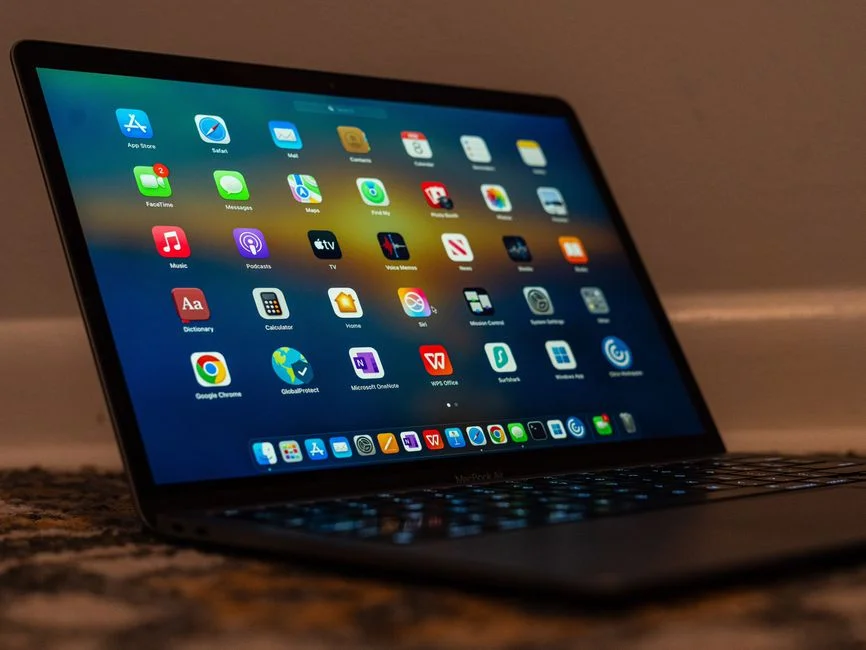
Apple confirmed the update applies globally to all devices compatible with Apple Intelligence, a list that now includes iPhone 15 Pro models and newer iPads. The company declined to specify exactly how many of its 1.5 billion active devices now qualify for the feature.
Why This Matters for Developers
Shortcuts has quietly become a backbone for thousands of third-party apps. Services like Things 3, Tapbots, and Workoutdoors built entire user experiences around the app's automation framework. With Apple Intelligence embedded at the system level, those developers face a dilemma: adapt their own tools to work alongside the new Shortcuts, or risk seeing users abandon their apps for native alternatives.
The economic stakes are real. Research firm Sensor Tower estimated in 2023 that productivity apps in Apple's App Store generated roughly $3.2 billion annually in direct revenue. A shift in user behavior toward native Shortcuts could compress margins for independent developers who rely on automation features as a selling point.
Competitive Pressure on Automation Rivals
Platforms like Zapier, which connects web apps and automation tools, also operate on iOS and may feel pressure. Shortcuts now handles many workflows that previously required a third-party service. Analysts at Bernstein told clients last month that Apple's tightening integration creates "structural headwinds" for standalone automation businesses across its platform.
Apple Intelligence as a Retention Engine
For Apple, the Shortcuts update is as much about hardware loyalty as it is about software. The company has invested heavily in its on-device AI model, and features like the revamped Shortcuts demonstrate tangible returns on that investment. Every task a user automates through Shortcuts creates another reason to stay within the Apple ecosystem rather than consider alternatives.
The strategy mirrors what Microsoft attempted with its AI Copilot features integrated across Windows. Apple, however, holds a key advantage: its closed hardware-software integration allows Apple Intelligence to access system-level functions that third-party AI tools cannot reach. Shortcuts now exploits that advantage directly.
Apple shares have gained 12 percent year-to-date, driven partly by services revenue growth that reached $24.2 billion in the most recent quarter. Features that increase daily app usage contribute directly to services revenue, which includes App Store commissions, Apple TV+ subscriptions, and cloud storage fees.
Investor Implications
The Shortcuts overhaul arrives as Apple prepares for its annual developer conference in Cupertino, California, where executives are expected to outline further AI ambitions. Wall Street has rewarded the company's measured approach to artificial intelligence, in contrast to rivals who moved faster but faced backlash over accuracy and privacy issues.
Shortcuts processes personal data entirely on-device under Apple Intelligence's privacy framework. That technical choice matters to regulators in the European Union, where the AI Act imposes strict rules on automated decision-making. By keeping AI processing local, Apple sidesteps certain compliance costs that competitors using cloud-based AI must absorb.
What Comes Next
Developers have until the public release of iOS 27, expected this autumn, to update their apps for compatibility with the new Shortcuts framework. Apple published documentation last week outlining the APIs third-party developers can now use to expose their app functions to Apple Intelligence.
The company also hinted at deeper Shortcuts integration with its Vision Pro headset, suggesting that cross-device automation could become a selling point as Apple expands its spatial computing ambitions. That development, if realized, would extend the economic argument for Apple Intelligence beyond the iPhone into a product line still finding its market footing.
The Bigger Picture for AI on Mobile
Apple's approach with Shortcuts reflects a broader industry shift: embedding AI into existing tools rather than launching separate AI products. Google has pursued a similar strategy with its Pixel phones, while Samsung has promoted Galaxy AI features across its device lineup. The competition means Shortcuts is no longer a quiet differentiator — it is a front in the war for mobile AI supremacy.
For businesses that rely on mobile productivity, the upgraded Shortcuts could reduce demand for specialized automation consultants. Tasks that once required custom scripting or third-party apps may become accessible to non-technical users. That democratization could lower operational costs for small businesses while simultaneously increasing pressure on companies that built their services around complexity.
Watch for Apple's developer conference announcements in June, where Shortcuts and Apple Intelligence are expected to receive further feature additions. The next iteration could determine whether Shortcuts becomes a genuine platform — or remains a powerful but underutilized feature buried in the Settings menu.
See Also
- Zelensky Warns of Missile Shortfall as Ukraine Struggles
- Pitso Recommends Mofokeng for Aston Villa — A Boost for EPL Market
Apple, however, holds a key advantage: its closed hardware-software integration allows Apple Intelligence to access system-level functions that third-party AI tools cannot reach. The company also hinted at deeper Shortcuts integration with its Vision Pro headset, suggesting that cross-device automation could become a selling point as Apple expands its spatial computing ambitions.
What is the latest news about apple gives shortcuts a ai overhaul app developers are already repricing?
Why does this matter for artificial-intelligence?
What are the key facts about apple gives shortcuts a ai overhaul app developers are already repricing?