Hyderabad city authorities have demolished dozens of commercial structures in a bid to clear illegal encroachments on public footpaths, triggering a wave of concern among local businesses and investors. The action, led by the Hyderabad Metropolitan Development Authority (HMDA), marks a sharp escalation in the city’s efforts to enforce urban planning rules, with immediate consequences for retail and service sectors. The move has also raised questions about the long-term impact on property values and economic activity in the region.
Hyderabad's Urban Overhaul Sparks Business Fears
The HMDA announced the operation last week, citing a 2019 urban planning ordinance that prohibits commercial activities on public spaces. Over 40 structures were dismantled in the city’s central business district, including shops and eateries that had operated for years without permits. The agency said the move aims to improve pedestrian access and reduce congestion, but business owners argue the sudden enforcement has left many without a legal means to operate.
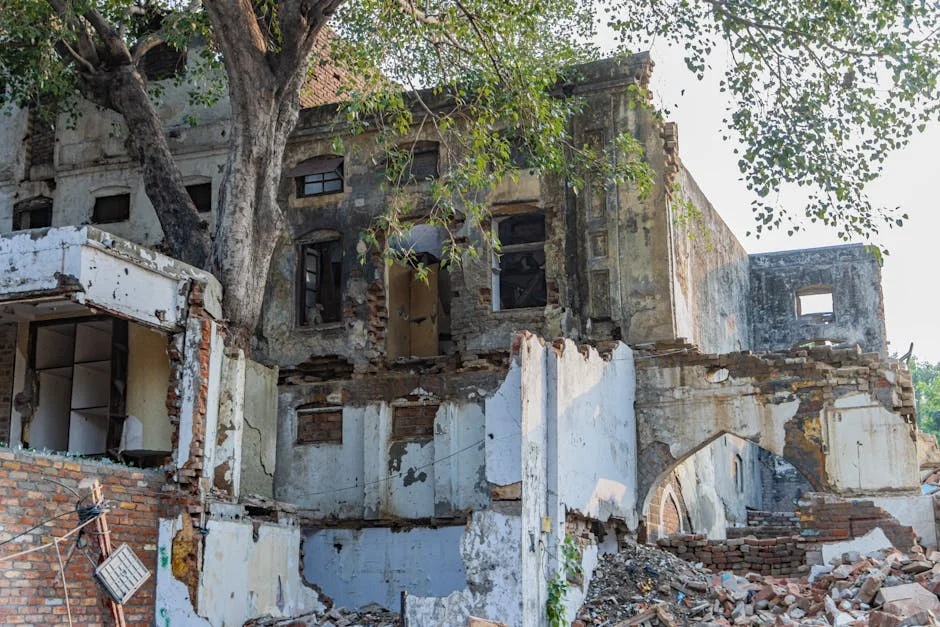
“We’ve been here for over a decade, and now they’re tearing down our shops without warning,” said Ravi Patel, owner of a popular street food stall in the Charminar area. “This is a direct hit to our livelihoods.” The HMDA has offered limited compensation, but many businesses say the amount is insufficient to cover losses.
Market Reactions and Investment Concerns
The demolition has sent ripples through local markets, with property prices in affected areas dropping by an estimated 12% in the past month, according to data from the Hyderabad Real Estate Association. Investors who had previously viewed the city as a growth hub are now reassessing their strategies, with some shifting funds to more stable markets. The uncertainty has also led to a slowdown in new commercial construction projects.
“This is a wake-up call for investors,” said Anjali Mehta, an economist with the Indian Institute of Management. “When local governments act unpredictably, it creates a climate of risk that can deter long-term investment.” The HMDA has defended its actions, stating that compliance with urban laws is essential for sustainable development.
Impact on Local Economy and Employment
The sudden disruption has had a direct effect on employment, with dozens of workers in the affected areas now facing job insecurity. The Charminar market, a major retail hub, reported a 30% drop in foot traffic following the demolitions. Small business associations have called for a more gradual approach, arguing that abrupt enforcement risks damaging the city’s economic fabric.
“We need clarity, not chaos,” said Arjun Deshmukh, a representative of the Hyderabad Small Business Association. “The government should have given us a transition period to adapt.” The city’s tourism sector has also been impacted, as visitors report increased congestion and reduced access to key landmarks.
Long-Term Urban Planning vs. Immediate Disruption
The HMDA’s actions have sparked a broader debate about the balance between urban development and the rights of small businesses. On one side, officials argue that the demolitions are necessary to restore order and improve public infrastructure. On the other, business owners and economists warn that the abrupt enforcement could stifle economic growth and discourage entrepreneurship.
The city’s mayor, K. Srinivas, has acknowledged the challenges but emphasized the need for strict compliance with urban laws. “We cannot allow illegal structures to undermine the city’s future,” he said in a recent statement. However, critics argue that the government’s approach lacks transparency and fails to account for the human and economic costs.
What Comes Next for Hyderabad?
As the city moves forward, the HMDA has announced plans for a public consultation process to address concerns and revise enforcement strategies. A review panel will be formed to assess the impact of the demolitions and propose alternative solutions. However, businesses and investors are urging the government to act more collaboratively to avoid further disruptions.
With the next municipal elections approaching, the issue has become a political flashpoint. Candidates are already using the controversy to position themselves as champions of small businesses or urban reform. For now, the city remains in a state of uncertainty, with the outcome of the review process likely to shape its economic and social landscape for years to come.
See Also
- Google Launches 32 Million Mosquitoes in California to Combat Disease Spread
- ONU Fires Employee for Drive-Thru Assault — What It Costs