A robotics firm called Flexion Robotics has built a humanoid robot designed to handle the kind of repetitive office work that traditionally goes to entry-level employees. The machine can draft documents, manage schedules, and process routine data requests without breaks, sick days, or salary expectations. Nvidia's involvement in the project has added credibility and capital, drawing attention from venture funds and corporate strategists alike.
What the Robot Actually Does
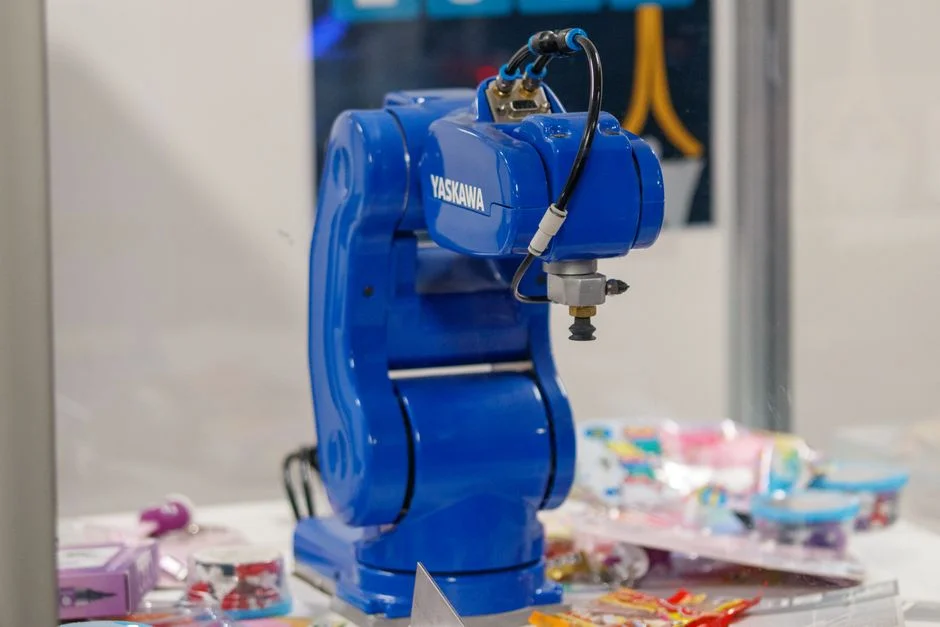
The Flexion Robotics platform uses a humanoid form factor—two arms, a torso, and a head mounted on a mobile base—to navigate standard office environments. Unlike earlier automation tools that required fixed workflows, this system adapts to unstructured tasks by reading documents, responding to basic queries, and learning from observed patterns. A company spokesperson told reporters the robot was tested across twelve weeks of simulated office scenarios in Austin, Texas.
The robot handles scheduling, email drafting, data entry, and document retrieval. Those tasks make up a substantial portion of what entry-level hires do in their first months on the job. Flexion Robotics designed the system specifically for that category of work, pitching it as an upgrade from robotic process automation tools that only handle structured, rule-based tasks.
Why Nvidia's Name Matters
Nvidia's participation goes beyond branding. The chipmaker supplies the processing architecture that allows the robot to run computer vision and language models in real time. That partnership gives Flexion Robotics access to hardware that competitors struggle to source, and it signals that Nvidia views office automation as a viable market. The relationship has already attracted secondary investment interest, with three venture funds approaching Flexion Robotics about funding rounds.
Nvidia's involvement also shapes how institutional investors read the announcement. When a semiconductor giant backs a robotics company, it suggests the underlying technology has passed a technical threshold. That kind of validation often moves market sentiment faster than product specs do.
Market Implications for Corporate Buyers
For companies watching labor costs climb, the economics are straightforward. One robot capable of replacing a full-time intern or entry-level administrator could pay for itself within eighteen months at typical US salary levels. That calculation is driving early conversations with enterprise clients, according to people familiar with Flexion Robotics' sales pipeline.
The immediate threat is not mass unemployment but selective replacement in sectors where office work dominates. Finance, legal, and administrative services firms employ large numbers of junior staff for document-heavy tasks. A robot that handles those tasks competently changes the unit economics of staffing in those industries.
The Cost Equation for Employers
Entry-level salaries in major US cities range from $45,000 to $65,000 annually, plus benefits and overhead. A humanoid robot does not require health insurance, paid leave, or training programs. If maintenance costs stay below $15,000 per year, the payback period meets the threshold most corporate procurement departments use for automation investments.
The risk for workers is concentrated in entry-level positions—the rung that leads to mid-career advancement. Fewer intern and junior analyst roles mean fewer pathways into professions that traditionally built middle-management pipelines. That secondary effect is harder to measure but potentially more disruptive over a decade.
Investor Appetite for Robotics Stocks
Publicly traded robotics companies have seen renewed interest since the start of the year, driven by advances in large language models that give machines better reasoning capabilities. Flexion Robotics remains private, but its valuation has reportedly doubled since Nvidia's involvement became public. The robotics index tracked by analysts has gained 14 percent over the past six months, outpacing broader technology sector gains.
Hedge funds and growth-oriented mutual funds are the most active buyers of robotics exposure right now. That demand is creating pressure on private markets too, where institutional investors are placing earlier bets on automation startups before they reach public markets.
What Competitors Are Doing
Flexion Robotics is not alone in targeting office work. At least five other firms have announced humanoid robots designed for service or administrative environments in the past eighteen months. The competitive landscape includes both established industrial robotics companies and newer entrants backed by technology investment. That crowding matters because it suggests the market will consolidate, and the companies with the strongest partnerships—particularly with chip suppliers and enterprise software vendors—have the best odds of surviving.
The timing of this announcement positions Flexion Robotics ahead of several competitors whose products remain in beta testing. First-mover advantage in enterprise sales is significant because procurement cycles for workplace technology can stretch twelve to eighteen months. Landing anchor clients now could determine market share by the time competitors reach commercial launch.
What Comes Next
Flexion Robotics plans to begin limited deployments with three corporate partners in the first quarter of next year. Those pilots will determine whether the robot performs as promised in real workplaces rather than controlled simulations. If the results hold, a broader commercial launch would follow in the second half of the year.
Investors should watch for announcements about additional enterprise clients, funding rounds, and any partnerships with cloud or enterprise software vendors. Regulatory scrutiny of humanoid robots in workplaces remains minimal for now, but that could change as deployment scales. The next twelve months will test whether the technology justifies the excitement—and whether corporate buyers actually sign contracts or simply express interest.
See Also
- Xiaomi Challenges Samsung’s Privacy Screen Tech — Market Fallout Expected
- Amazon Launches Prime in South Africa for R59 Monthly
What is the latest news about flexion robotics robot replaces interns investors are already noticing?
Why does this matter for artificial-intelligence?
What are the key facts about flexion robotics robot replaces interns investors are already noticing?