A cybersecurity investigation has revealed how criminal networks combine stolen personal data with tools like Comedyhacker to produce convincing deepfake content in a matter of minutes. Clement Manyathela, a digital forensics expert who contributed to the research, confirmed that the process requires minimal technical skill, raising alarm bells across financial institutions and corporate security teams worldwide.
The Deepfake Assembly Line
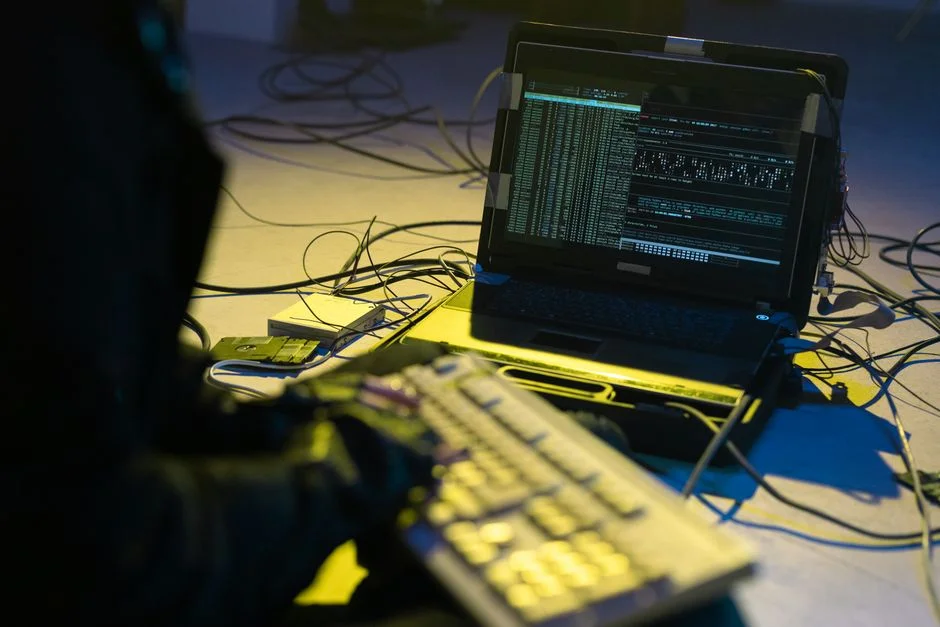
Researchers at the Digital Risk Assessment Institute examined how Comedyhacker streamlines the creation of synthetic media using compromised databases. Tobias Schroedel, who led the technical analysis, demonstrated that a fraudster needs only a victim's name, photograph, and partial identification numbers to generate a serviceable deepfake video within approximately seven minutes. The tool automates voice matching, facial animation, and lip-sync correction without requiring any programming knowledge.
The implications hit financial services hardest. Banks and payment platforms rely heavily on voice authentication and video verification for high-value transactions. If criminals can replicate a customer's appearance and speech from leaked data, the entire verification infrastructure becomes vulnerable. Investment firms holding client assets face compounded risk when synthetic identities can bypass security checkpoints designed for human reviewers.
Stolen Data Meets Synthetic Media
The convergence of two established criminal markets has created something more dangerous than either alone. Massive data breaches over the past five years have flooded underground markets with personal information, while deepfake technology has grown simultaneously more accessible and more convincing. Comedyhacker represents the latest step in that trajectory: a tool that collapses the gap between stolen credentials and deployable fraud.
According to industry estimates, over 15 billion individual records have been exposed through documented breaches since 2019. That stockpile sits ready for weaponisation. A single stolen identity package—including a photograph, voice sample, and sufficient personal details—now sells for as little as $50 on some criminal forums, making the barrier to entry vanishingly low for anyone with basic operational security knowledge.
Business and Investor Exposure
Corporate boards are beginning to grapple with a threat that traditional cybersecurity spending does not fully address. Existing perimeter defences, endpoint protection, and employee training programmes focus on preventing data theft or phishing attacks. Deepfake fraud operates downstream, exploiting data that has already been stolen and is beyond the organisation's control. Insurance policies and fraud liability frameworks have not caught up with synthetic identity risk.
Market analysts point to several sectors facing immediate exposure. Property transaction services, where verification often relies on video calls, represent a primary target. Wealth management firms handling large transfers face elevated risk during client onboarding or privileged administrative requests. Even human resources departments screening remote workers cannot assume that live video represents a genuine applicant.
The cost trajectory concerns investors most. Fraud losses attributable to synthetic identities are projected to exceed $2.6 billion globally this year, with that figure expected to climb as deepfake tooling matures. Companies lacking dedicated synthetic media detection capabilities may find themselves absorbing losses or facing regulatory scrutiny as consumer protection agencies tighten verification standards.
Detection Industry Responds
Technology vendors have rushed detection tools to market, though their effectiveness varies widely. Schroedel's team tested eleven commercial detection platforms against Comedyhacker output and found that only three identified the synthetic content with reliable consistency. The remainder either flagged the material as authentic or returned inconclusive results. False negatives in financial contexts carry direct monetary consequences, while false positives create friction that damages customer relationships.
Several major exchanges and trading platforms have begun implementing multi-layered verification requiring corroborating signals beyond video or voice alone. Behavioural biometrics, device fingerprinting, and transaction pattern analysis supplement visual confirmation. The approach adds friction but reflects a broader recognition that single-factor verification cannot withstand synthetic media attacks.
Regulatory Pressure Mounts
Regulators in the United States and European Union have signalled intent to require financial institutions to implement deepfake-resistant authentication by the end of the next fiscal year. Compliance deadlines remain fluid, but the direction of travel is clear. Firms that delay investment in detection infrastructure risk both regulatory penalties and competitive disadvantage as customers migrate toward providers offering stronger security guarantees.
Consumer protection advocates argue that the burden should not fall entirely on financial institutions. Platform operators hosting video and audio content face pressure to watermark synthetic media and disclose when content has been digitally altered. Enforcement mechanisms remain underdeveloped, but proposed legislation in California and proposed EU regulations suggest mandatory disclosure requirements are approaching.
What Comes Next
The arms race between creation and detection tools shows no sign of resolving soon. Comedyhacker represents a specific implementation, but the underlying technology—generative adversarial networks, voice synthesis, and facial animation—continues advancing across legitimate and criminal contexts alike. Schroedel expects the next generation of tools to reduce production time below five minutes and improve output quality significantly.
Security teams should monitor three developments in the coming months. First, watch for updated guidance from financial regulatory bodies on synthetic identity risk management. Second, track which detection vendors demonstrate consistent performance against emerging deepfake variants in independent testing. Third, observe whether major data broker platforms face renewed scrutiny or regulation, potentially reducing the volume of personal information available for weaponisation.
The window for proactive preparation is narrowing. Organisations that treat deepfake fraud as a theoretical risk rather than an operational reality may find themselves responding to incidents rather than preventing them.
See Also
- Myanmar Detains Suu Kyi — Markets Brace for Shock
- Wall Street Slumps as Oil Rebounds and Nvidia Fails to Impress
Several major exchanges and trading platforms have begun implementing multi-layered verification requiring corroborating signals beyond video or voice alone. Behavioural biometrics, device fingerprinting, and transaction pattern analysis supplement visual confirmation.