United States regulators have authorized ten Chinese technology firms to purchase Nvidia’s H200 graphics processing units, marking a strategic pivot in the ongoing semiconductor war. This decision allows key players in Beijing’s tech sector to secure critical hardware that was previously locked out by complex export controls. The move sends immediate signals to global investors about the fluidity of US-China trade relations and the enduring demand for American silicon.
Market analysts are already adjusting their forecasts for Nvidia’s revenue streams from the Asia-Pacific region. The approval comes as Chinese cloud providers face mounting pressure to upgrade their infrastructure before the next generation of chips arrives. For investors, this represents a tangible reduction in near-term supply chain friction for one of the world’s most valuable tech stocks.
The Strategic Value of the H200 Chip
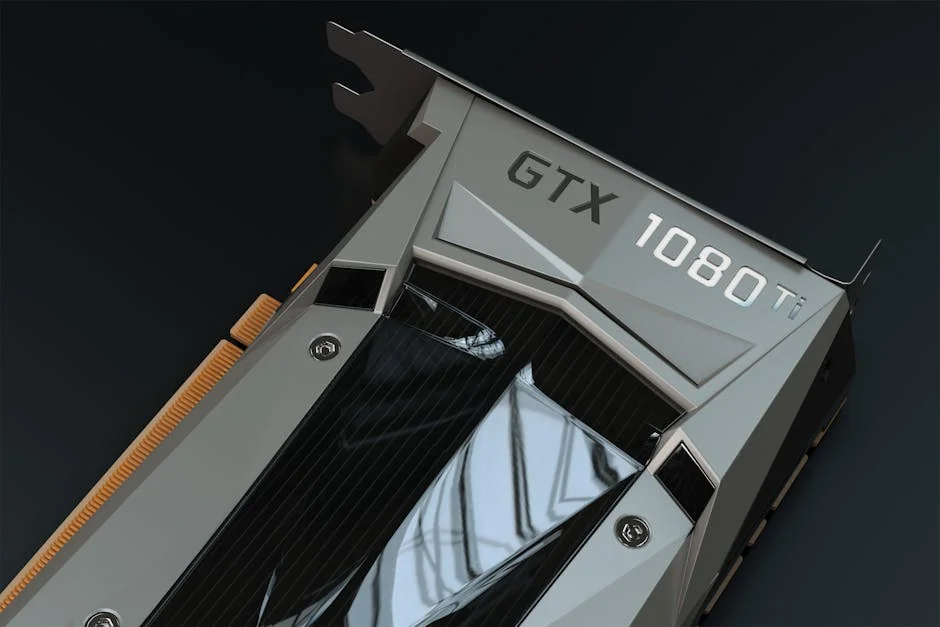
Nvidia’s H200 chip is a specialized variant of its flagship H100, designed to offer superior memory bandwidth for large language models and generative AI workloads. The H200 features 141 gigabytes of High Bandwidth Memory (HBM3e), which is significantly higher than the 80 gigabytes found in the standard H100. This memory advantage is crucial for Chinese firms that need to process vast datasets without waiting for the full release of the Blackwell architecture.
The decision to greenlight these sales reflects a nuanced approach by the US Commerce Department. Rather than imposing a blanket ban, Washington is allowing specific entities to buy specific chips to maintain revenue flow while restricting access to the most advanced AI accelerators. This strategy aims to keep Chinese tech giants dependent on US innovation while slowing their immediate computational lead.
For Nvidia, this approval secures a vital revenue stream in a market that accounts for roughly 30% of its total sales. The H200 serves as a bridge product, keeping Chinese customers in the Nvidia ecosystem until newer models are officially cleared for export. This continuity is essential for maintaining pricing power and negotiating leverage in Shanghai and Shenzhen.
Impact on Chinese Tech Giants
The ten approved companies include major cloud infrastructure providers and artificial intelligence startups that are central to China’s digital economy. These firms had faced uncertainty regarding their ability to procure the latest hardware, which threatened to stall their training cycles for large language models. The removal of this uncertainty allows them to accelerate deployment schedules and compete more effectively against domestic rivals like Baidu and Alibaba.
Chinese technology leaders view this approval as a temporary reprieve rather than a permanent solution. The reliance on US chips exposes them to potential future restrictions, prompting increased investment in domestic semiconductor manufacturing. However, building a fully competitive supply chain takes years, making the H200 an essential stopgap for maintaining competitive edge in the global AI race.
The approval also influences the valuation of Chinese tech stocks listed in New York and London. Investors have reacted positively to the news, seeing it as a reduction in the immediate risk of hardware shortages. This positive sentiment could drive further capital inflows into the Shanghai Composite Index, particularly in the technology sector where volatility has been high.
Cloud Infrastructure and Data Centers
Cloud service providers in China are the primary beneficiaries of this decision. These firms operate massive data centers in cities like Beijing, Shanghai, and Hangzhou, where the H200 chips will be deployed to power enterprise AI services. The enhanced memory capacity of the H200 allows for more efficient processing of natural language and image recognition tasks, which are core offerings for these cloud platforms.
The deployment of H200 chips will likely lead to a surge in AI-as-a-Service subscriptions for Chinese businesses. Companies that previously hesitated to adopt AI due to high computational costs may find the H200 offers a more cost-effective solution. This could accelerate digital transformation across various industries, from finance to manufacturing, boosting overall economic productivity.
However, the limited number of approved firms means that competition for these chips will remain intense. Smaller startups may find themselves at a disadvantage if they are not among the ten selected entities. This dynamic could lead to consolidation in the Chinese AI sector, where larger firms with better access to hardware can outpace their smaller competitors.
Investor Sentiment and Market Reactions
Global financial markets have responded with cautious optimism to the news. Nvidia’s stock price has seen modest gains as investors digest the implications of the approval. The market is interpreting this move as a sign that the US government is willing to flex its export controls to benefit domestic champions like Nvidia. This flexibility reduces the perceived risk of a sudden, total decoupling of the two tech giants.
Investors are closely watching the supply chain dynamics in Taiwan and South Korea, where key components for the H200 are manufactured. Any disruption in these regions could still impact delivery times for the Chinese buyers. The approval does not eliminate all risks, but it does provide a clearer path for revenue recognition in the upcoming fiscal quarters.
The broader semiconductor sector is also feeling the effects. Competitors like AMD and Intel are monitoring the situation to see if they can secure similar approvals for their own products. The success of the H200 in China could set a precedent for how the US manages future chip exports, influencing investment decisions across the entire industry. This creates a ripple effect that extends far beyond Nvidia’s balance sheet.
Geopolitical Implications for US-China Relations
This decision highlights the complex interplay between economic interests and geopolitical strategy in the US-China relationship. The United States is using its dominance in the semiconductor industry as a lever to influence Chinese technological progress. By controlling the flow of advanced chips, Washington can slow down China’s AI advancements without completely cutting off trade.
China views these controls as a tool of economic warfare, designed to stifle its rise as a global tech superpower. The approval of ten firms is seen as a tactical concession, allowing Beijing to maintain some momentum while preparing for a more prolonged struggle. This dynamic is likely to shape diplomatic negotiations and trade agreements in the coming years.
The move also sends a signal to other allies and partners of the United States. Countries like Japan and the Netherlands, which are key players in the semiconductor supply chain, are watching closely to see how the US balances its economic and strategic goals. This could influence their own export control policies and investment decisions in the tech sector.
Future Outlook and What to Watch
The approval of these ten firms is just the beginning of a longer process. Investors and businesses should monitor subsequent announcements from the US Commerce Department regarding additional approvals or potential restrictions. The situation remains fluid, and new developments could quickly alter the market landscape.
Key indicators to watch include the actual volume of H200 chips purchased by the Chinese firms and the speed of their deployment. If the uptake is slower than expected, it could signal deeper structural issues in the Chinese tech sector. Conversely, rapid adoption would confirm the strong demand for US hardware and bolster Nvidia’s growth prospects.
Regulators in Washington are expected to review the impact of this decision within the next six months. This review period will be critical in determining whether the current approach is sustainable or if further adjustments are needed. For now, the market is betting on stability, but the underlying tensions between the two economic powers remain a significant risk factor for long-term investors.
See Also
- Microsoft Security Chief Exposes 'Agent Sprawl' Crisis as SARB Tightens AI Rules
- US Launches Trade Investigation - China and India in the Crosshairs
Key indicators to watch include the actual volume of H200 chips purchased by the Chinese firms and the speed of their deployment. Investors are closely watching the supply chain dynamics in Taiwan and South Korea, where key components for the H200 are manufactured.
What is the latest news about us unlocks nvidia h200 for china market shockwaves begin?
Why does this matter for cybersecurity?
What are the key facts about us unlocks nvidia h200 for china market shockwaves begin?