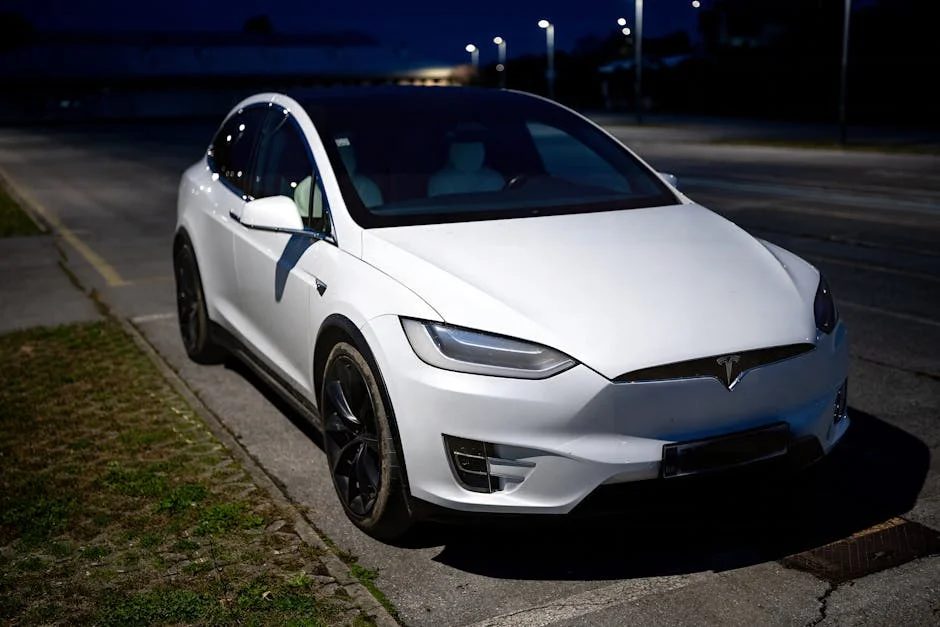
Elon Musk has publicly realigned with Donald Trump, effectively ending months of speculation about his political neutrality in the ongoing trade war between the United States and China. This strategic pivot occurs as Tesla faces mounting pressure in Beijing, where local competitors are aggressively eating into its market share. Investors are now scrambling to assess how this political shift will impact Tesla’s valuation and the broader US-China economic relationship.
Tesla’s Strategic Pivot in Beijing
Musk’s return to Trump’s side marks a decisive break from his previous attempts to court Chinese officials. The CEO has long positioned himself as a bridge between Washington and Beijing, leveraging his business interests in both nations. However, recent developments in Shanghai suggest that this balancing act has become increasingly difficult to maintain for the electric vehicle giant.
The tension stems from the rapid expansion of Chinese EV makers like BYD and Nio. These companies have begun to challenge Tesla’s dominance in the world’s largest auto market. Musk’s political realignment signals a bet that US policy support will outweigh the risks of alienating Chinese consumers and regulators.
Market Reaction to Political Realignment
Wall Street reacted swiftly to news of the realignment. Tesla shares saw a notable uptick in pre-market trading, driven by investor confidence that Trump’s tariff policies might favor domestic champions like Tesla. Analysts are closely watching the stock for volatility as markets digest the implications of this geopolitical shift.
The broader market is also adjusting to the potential for renewed trade tensions. The S&P 500 experienced minor fluctuations, with technology and manufacturing sectors showing mixed signals. Investors are particularly concerned about how a more aggressive US stance could affect supply chains and consumer prices.
Impact on US-China Trade Dynamics
This development adds another layer of complexity to the already strained relationship between Washington and Beijing. Trade experts warn that Musk’s move could accelerate the decoupling of the two economies. The United States may leverage Tesla’s position to extract more concessions from China, particularly regarding market access and intellectual property rights.
China’s response remains to be seen, but historical precedents suggest a mix of rhetorical bluster and targeted economic pressure. The Chinese Ministry of Commerce has previously used regulatory hurdles to signal displeasure with foreign firms. Tesla could face stricter scrutiny or sudden policy changes in Shanghai and other key manufacturing hubs.
Tesla’s Business Risks in China
Tesla’s reliance on the Chinese market is substantial, accounting for a significant portion of its global deliveries. Any disruption in Beijing could have immediate and severe consequences for the company’s bottom line. The Shanghai Gigafactory is not just a production hub; it is a critical node in Tesla’s global supply chain.
Competitors in China are well-positioned to capitalize on any weakness. BYD, for example, has been gaining ground with competitive pricing and localized features. If Tesla loses political favor in Beijing, these rivals could quickly capture market share, forcing Tesla to spend heavily on marketing and incentives to retain customers.
- Loss of market share to domestic EV competitors
- Increased regulatory scrutiny and potential tariffs
- Supply chain disruptions affecting global deliveries
- Consumer sentiment shifts against the "American" brand
Investor Perspectives on the Shift
Investors are divided on the wisdom of Musk’s move. Some view it as a necessary step to secure long-term political support in the US, which is Tesla’s home market. Others worry that the short-term pain in China could outweigh the long-term gains in Washington. The uncertainty has led to increased trading volume and wider bid-ask spreads for Tesla stock.
Hedge funds and institutional investors are adjusting their portfolios to hedge against geopolitical risk. Some are increasing their exposure to US manufacturing stocks, betting on a "America First" policy agenda. Others are diversifying into emerging markets to reduce reliance on the US-China trade corridor.
Broader Economic Implications
The realignment has wider implications for the global economy. A more confrontational US-China trade relationship could lead to higher inflation in both countries. Tariffs and non-tariff barriers tend to increase costs for businesses, which are often passed on to consumers. This could dampen economic growth and affect investment decisions across multiple sectors.
Small and medium-sized enterprises (SMEs) are particularly vulnerable to these shifts. They often lack the resources to navigate complex trade regulations and currency fluctuations. The uncertainty could lead to delayed investments and hiring freezes, slowing down economic recovery in key industries.
What to Watch Next
Investors and policymakers should closely monitor the upcoming statements from the US Trade Representative and the Chinese Ministry of Commerce. Any official comments on Tesla or the broader EV sector will provide clues about the direction of future trade policy. The next quarterly earnings report from Tesla will also be critical, as it will reveal the immediate financial impact of the political realignment.
What is the latest news about musk defies beijing realigns with trump to shake up markets?
Why does this matter for artificial-intelligence?
What are the key facts about musk defies beijing realigns with trump to shake up markets?