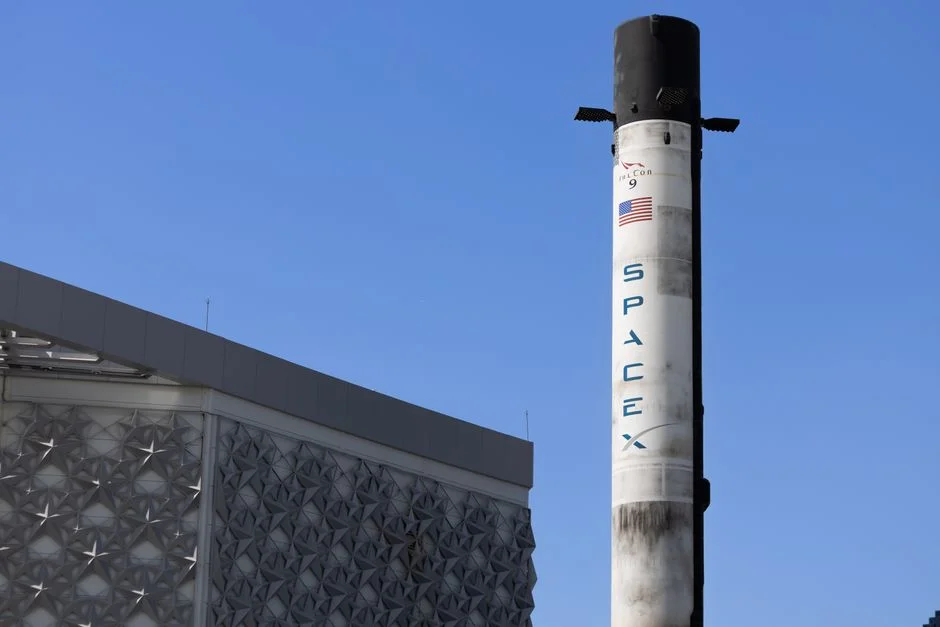
SpaceX has officially announced a strategic partnership with Anthropic, marking a significant shift in how artificial intelligence will power next-generation aerospace operations. This collaboration brings together the commercial space leader and one of the most promising AI firms in Silicon Valley. The deal positions both companies to accelerate the deployment of autonomous systems in orbit and on the ground.
Strategic Alignment Between Aerospace and AI Giants
The partnership represents a convergence of two high-growth sectors that have operated with relative independence for years. SpaceX needs advanced computational power to manage its rapidly expanding fleet of Starlink satellites and Starship rockets. Anthropic provides the sophisticated large language models and reasoning engines required to process vast amounts of telemetry data in real time. This synergy allows SpaceX to reduce its reliance on traditional ground control centers.

Elon Musk has long advocated for the integration of AI into every facet of his business empire. The move signals a deliberate strategy to embed Anthropic’s models into the operational backbone of SpaceX. Investors are watching closely to see how this technical alliance translates into cost savings and efficiency gains. The immediate focus is on automating satellite deployment and orbital adjustments without constant human intervention.
Market Reaction and Investor Sentiment
Financial markets responded with cautious optimism following the announcement. Shares of publicly traded AI competitors saw minor fluctuations as analysts assessed the competitive landscape. The deal highlights the growing demand for specialized AI solutions in the hardware sector. Investors are particularly interested in how this partnership might affect the valuation of both companies in the coming quarters.
Anthropic benefits from early access to a massive, real-world dataset generated by SpaceX’s orbital operations. This data is invaluable for training and refining AI models that operate in low-latency environments. For SpaceX, the integration promises to lower operational costs by streamlining communication with its constellation of satellites. The financial implications could be substantial if the AI systems can predict maintenance needs before failures occur.
Competitive Dynamics in the Tech Sector
The collaboration intensifies the rivalry between major tech firms vying for dominance in the AI space. Google, Microsoft, and Amazon have all invested heavily in AI, but SpaceX’s entry adds a unique hardware dimension. The partnership challenges the assumption that AI is primarily a software play. It demonstrates that physical infrastructure provides a critical edge in model training and testing.
Competitors in the aerospace industry are now under pressure to secure similar AI alliances. Boeing and Lockheed Martin may need to accelerate their own digital transformation strategies to keep pace. The market is beginning to price in the value of AI-driven efficiency in manufacturing and logistics. This shift could reshape the competitive hierarchy in the global space economy.
Operational Implications for SpaceX
SpaceX operates one of the most complex logistical networks in the aerospace industry. The integration of Anthropic’s AI will enhance the company’s ability to manage this complexity. Autonomous decision-making will become a standard feature in satellite operations. This change reduces the bottleneck of human analysis and speeds up response times to orbital debris or signal interference.
The partnership also supports SpaceX’s long-term goal of establishing a self-sustaining colony on Mars. AI systems will be essential for managing life support, navigation, and resource allocation on the Red Planet. By testing these systems in Earth’s orbit, SpaceX can validate their reliability before sending them deeper into space. The operational efficiency gains could shorten the timeline for future Starship launches.
Anthropic’s Growth Trajectory and Valuation
Anthropic has emerged as a key player in the race to define safe and scalable artificial intelligence. The partnership with SpaceX validates the company’s technology in a demanding, high-stakes environment. This real-world application strengthens Anthropic’s case for a higher valuation in its next funding round. Investors are likely to view the deal as a proof of concept for Anthropic’s enterprise capabilities.
The company’s focus on interpretability and safety resonates with SpaceX’s need for predictable AI behavior. Unlike black-box models, Anthropic’s engines provide clearer insights into decision-making processes. This transparency is crucial when AI systems control multi-million-dollar assets in space. The deal could attract more enterprise clients who prioritize reliability over raw computational power.
Economic Impact on the United States
This collaboration reinforces the United States’ leadership in both the aerospace and AI industries. The synergy between these two sectors creates high-value jobs in engineering, data science, and software development. The economic ripple effects extend to suppliers and contractors who provide components and services to both companies. The partnership could stimulate further investment in the broader tech ecosystem.
The integration of AI into aerospace operations also has implications for national security. The United States Space Force and other agencies may look to adopt similar AI-driven strategies. This could lead to increased government contracts for both SpaceX and Anthropic. The economic benefits of this technological advancement could extend beyond the private sector into public infrastructure.
Challenges and Risks to Monitor
Integrating AI into critical space operations is not without its risks. Software bugs or model hallucinations could lead to costly mistakes in orbit. Both companies must ensure that their AI systems are robust enough to handle unexpected variables. The challenge lies in balancing autonomy with the need for human oversight in high-stakes scenarios.
Data privacy and intellectual property are also key considerations. SpaceX generates vast amounts of proprietary data that will be fed into Anthropic’s models. Clear agreements on data ownership and usage rights will be essential to protect both companies’ interests. Any disputes over data could delay the full realization of the partnership’s benefits.
The success of this partnership depends on seamless technical integration and cultural alignment. Both companies operate at a fast pace, but their engineering cultures differ. SpaceX is known for its hardware-centric, iterative approach, while Anthropic focuses on software and model refinement. Bridging these cultural gaps will be crucial for long-term collaboration.
Future Outlook and What to Watch
Investors should monitor the initial performance metrics of the AI systems in orbit. Early data on efficiency gains and error rates will provide insights into the partnership’s success. The next six months will be critical for establishing a strong foundation for the collaboration. Any major milestones or setbacks will likely influence the stock performance of related tech companies.
The broader market will also watch for announcements from other aerospace firms. If Boeing or Lockheed Martin announce similar AI partnerships, it could signal a wider industry trend. This would further validate the strategic importance of AI in the space economy. The coming quarters will reveal whether this partnership is a pioneering move or part of a larger wave of innovation.
See Also
- Alcaraz Loses Monte Carlo Title to Sinner in Historic Shift
- Gen Z Masters Online — But Employers Are Still Hiring the Wrong Way
What is the latest news about spacex and anthropic forge ai alliance market stakes rise?
Why does this matter for science?
What are the key facts about spacex and anthropic forge ai alliance market stakes rise?